Click Here to view the Mario Vargos Llosa and Contemporary Debates.
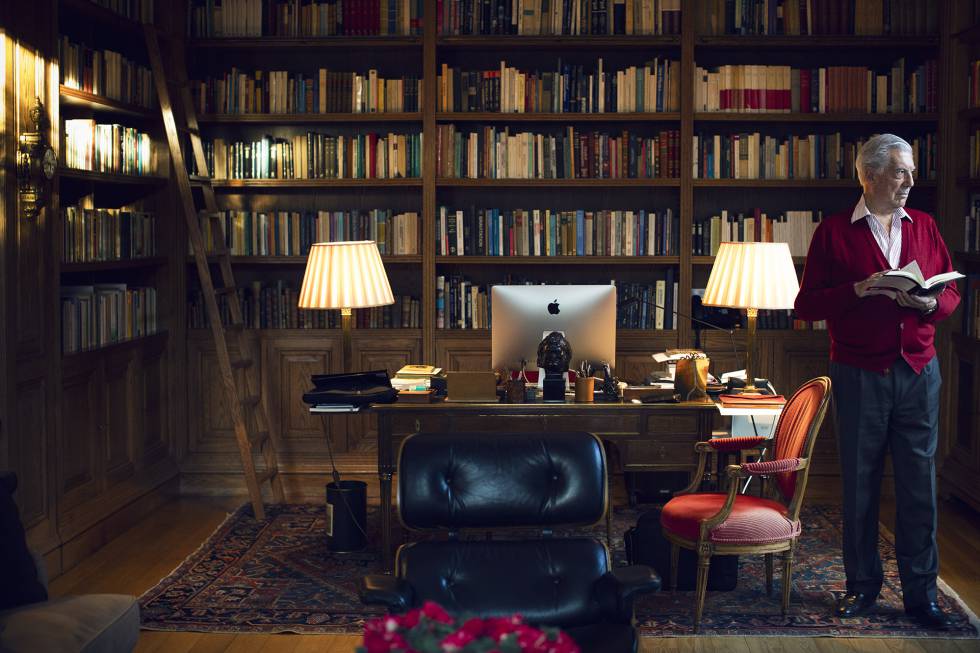
The subject like Liberals, Nationalism,
Populism, greatest challenge to Democracy, intellectual honesty, literature and
morality political correctness and freedom and technology are in the center of
debate topics. Mario Vargos Llosa talks
about this all the things in his book ‘The Call of the Tribe’.
According to Mario Vargos Llosa
the great challenge or biggest enemy of
democracy is populism. Another great challenge in a democratic form of
government is ensuring that the electronic is well educated and engaged. Since
democracy is government of the people, by the people, and for the people, it
depends upon the people to play an active and informal role in their own
government. If a majority of the people become uneducated, ill informed, subject
to gross political manipulation, or apathetic, an effective democratic government
cannot survive.
Liberal or liberalism, a
political philosophy founded on ideas of liberty and equality. He said that
liberalism defends some basic ideas like freedom, individualism, the rejection
of collectivism and nationalism-in other words, all the ideologies or doctrines
that limit freedom within society. Liberals reject nationalism because it is
incompatible with freedom. Liberals believe that nationalism involves a kind of
racism. Neo-liberalism is a way of caricaturing liberalism and presenting it is
a ruthless form of capitalism.
The main purpose of
literature, as we have already pointed out, is to give aesthetic pleasure, but
it is wrong to say that literature should be amoral or anti-moral. On the other
hand, the business of the literary artist is not to teach, but to exhibit. “Life
ought to be like that,” says the moralist. “Life looks like that”, says the
artist. Having had his intuition and being satisfied with that, the artist has
no other duty except that of expressing it as perfectly as he can and
communicating it to others. But we admit that moral considerations cannot fail
to enter into the subject-matter of every artist who is handling life and
character. A moral issue may characterize the theme which has been chosen—as it
does in Hamlet, in Macbeth, and in most of the great tragedies of
the world. Characters will often be lovable or the reverse according to the
manner in which their moral attributes have been sympathetically treated.
Morality being one of the principal issues in life belongs to the very fiber
and texture of all literature. It cannot be otherwise, for life is its
subject-matter. According to Mario
Vargos Llosa literature and morality don’t get along. They’re enemies. And you have to respect literature if you
believe in freedom.
(NAEEM)
Works Cited
NAEEM, PROF. Literature and Morality. 16
December 2010. 5 March 2018
<https://neoenglish.wordpress.com/2010/12/16/literature-and-morality/>.
(Rico)
Rico, Maite. Interview.
2 March 2018. 7 March 2018 <https://elpais.com/elpais/2018/02/27/inenglish/1519736544_699462.html>.

No comments:
Post a Comment